
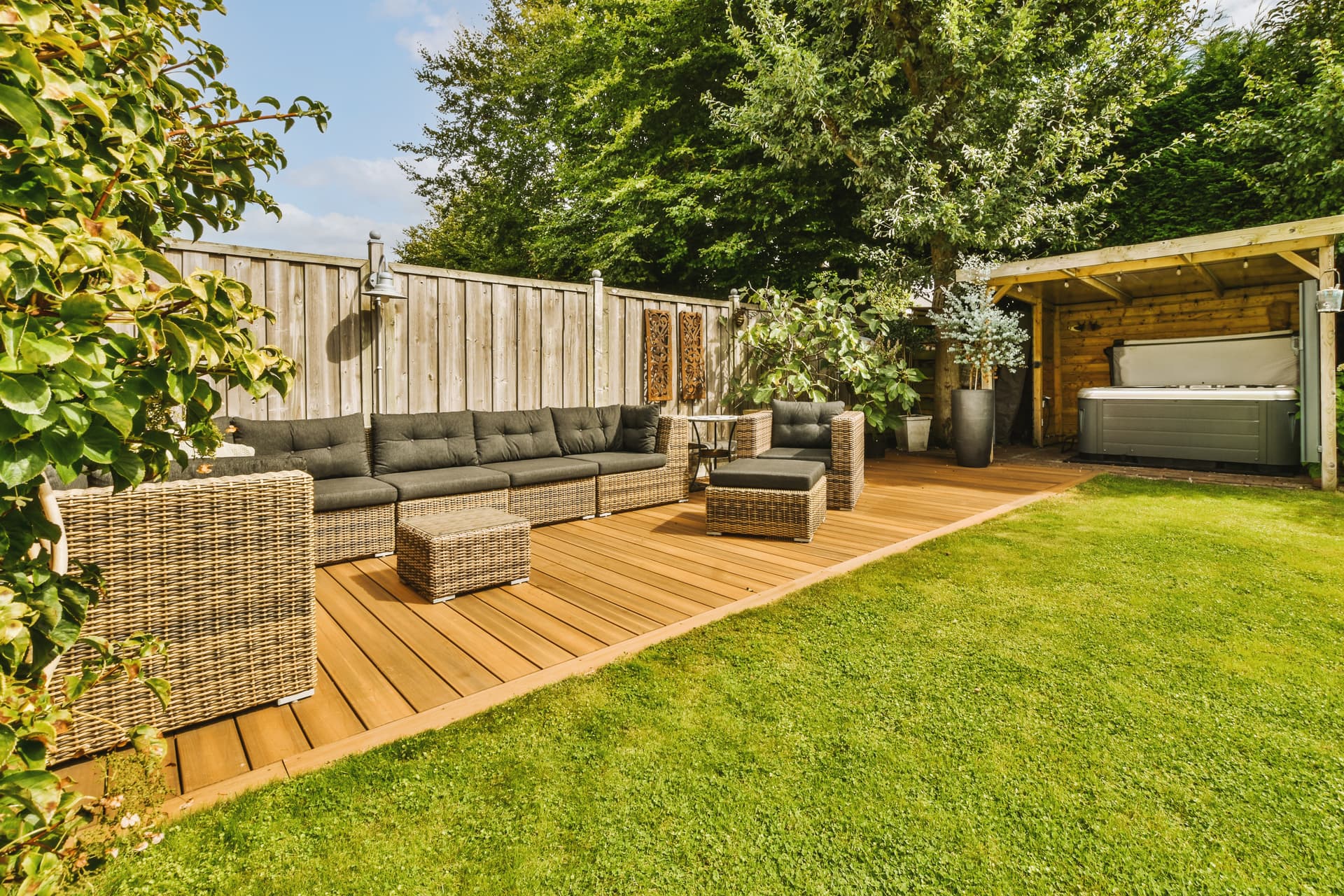
Timber or Composite Decking: How to Choose for Your Garden
Choosing decking is not simply a matter of picking the board you like best. The material affects the look of the garden, the maintenance you will need to keep up with and the details of how the deck is installed. For Bicester homeowners weighing up timber and composite, the useful question is which trade-offs suit your home and how you use the space.
Start with how you want the deck to feel
Timber has a natural grain and variation, so boards can give a deck a character that is difficult to reproduce exactly. Different timber types and finishes create different appearances, and the surface can change in colour as it ages. If you like natural variation and are comfortable with the deck developing its own appearance, timber may suit you.
Composite boards are manufactured products, and their colour and surface pattern are more consistent from board to board. That can work well when you want a more uniform finish alongside a contemporary extension or a neatly defined patio area. But consistency is a preference, not an automatic improvement. Look closely at the actual board finish rather than choosing from a small image or a colour name alone.
Think about how the deck will sit with the house, fences, paving and planting. A board that looks appealing by itself may feel out of place across a large area. If possible, view a sample in the garden and consider it beside the surfaces it will meet. Check the colour in the position where the deck will be used, rather than relying only on how it appears indoors.
Be honest about maintenance
Timber is a natural material, so its appearance can change over time. The care it needs depends on the timber and finish selected, as well as the result you want to maintain. Before choosing, ask what routine cleaning and any recommended treatment involve. Consider whether you are happy to keep up that care, not just whether you like the fresh installation.
Composite is often chosen by people looking to reduce the routine work associated with timber, but it still needs attention. Dirt and debris can collect between boards, and the surface needs cleaning in line with the product guidance. Find out what the manufacturer recommends for cleaning and which products or methods to avoid. “Lower maintenance” should not be read as “no maintenance”.
A practical decision is to picture an ordinary week, not just the finished photographs. If you want the deck to retain a particular appearance and are prepared to care for it, timber may be a good fit. If you would rather have a more consistent manufactured finish and less routine treatment, composite may be more appealing.
Check the installation details before settling on a board
The visible boards are only one part of a deck. The frame underneath, how the boards are secured and how the edges are finished all need to suit the chosen product. Composite boards, in particular, may come with product-specific instructions on the gaps between boards, how they should be secured and how the edges should be finished. Those details should be checked for the actual product, rather than assumed to be interchangeable with another board.
Your garden layout matters too. A deck that meets paving, steps, a wall or a sloping section may need carefully considered edges and transitions. Think about where the deck will finish, how you will move between surfaces and whether the board direction supports the layout you want. These choices affect the finished look and can influence how the installation is planned.
When comparing options, ask how the boards are fixed, what finish is used at exposed edges and what care the chosen product needs. Those questions help you compare complete proposals, rather than judging only the board colour or initial appearance.
A simple way to make the choice
Use this order to narrow it down:
- Decide whether you prefer natural variation or a more consistent manufactured appearance.
- Be realistic about the level of cleaning and ongoing care you are willing to do.
- Check the product guidance for maintenance, fixings and finishing details.
- Consider how the deck will meet the house, paving, steps and the rest of the garden.
- Compare suitable options in the space, not just in a catalogue.
There is no material that is automatically right for every garden. The best choice is the one whose appearance, care requirements and installation details suit your priorities. We discuss those trade-offs as part of our decking work in Bicester and nearby areas. For an overview of the service, see our Decking Installation page. If you are planning a deck, we can help you consider which option fits your garden and how you intend to use it.
